Group formation
Formed and sustained 1,345 men’s and women’s self-help groups in 11 districts of Tamil Nadu, from 644 groups with 11,814 members in 2005–06.
Organizing women into self-help groups for collective action and community development.
Understanding
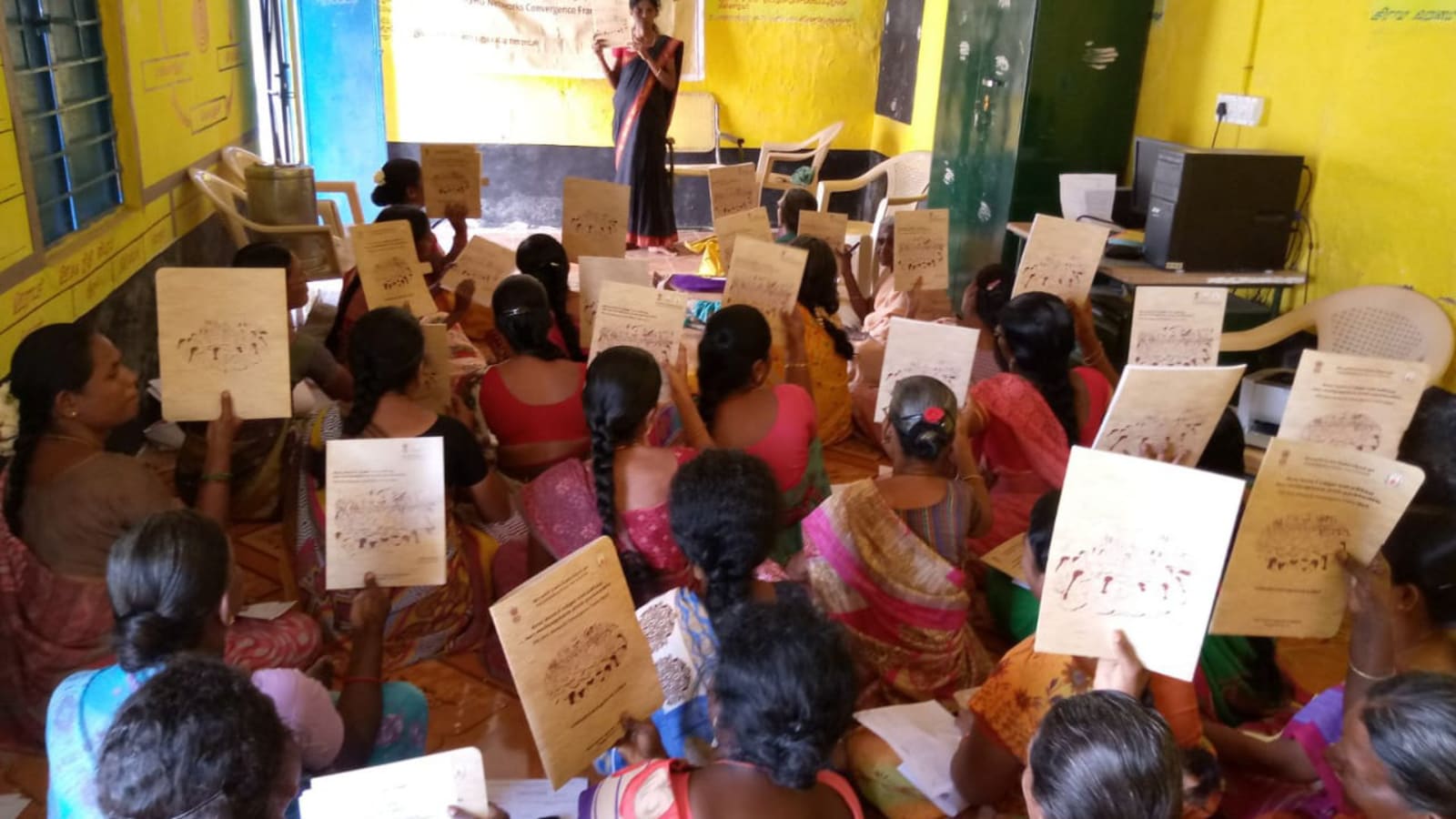
A self-help group (SHG) is a small group of 10–15 women who come together to save money, access credit and support each other in development activities — a grassroots platform for collective action.
Community mobilization takes the model further — organizing these groups and linking them with broader development initiatives and government schemes. Our programmes focus on forming, strengthening and sustaining women's collectives that serve as platforms for economic empowerment, social transformation and community development. The trust’s own annual reports trace the growth: 644 groups with 11,814 members across nine districts by 2005–06, 844 men’s and women’s groups in 11 districts in 2006–07, and 1,345 by 2012–13.
The watershed programmes of the early 2000s organised 10,925 people into self-help groups — the activity tables count participants, not groups. Through the SHG model, women gain access to financial services, develop leadership skills and become agents of change in their communities. Coodu Trust was the approved NGO for Mahalir Thittam in Karur district, and in 2020–21 NABARD Karur sanctioned 150 joint liability groups to the trust in Kadavur block, of which 100 were formed and opened bank accounts for 600 members.
Why this work matters
On their own, poor rural women lack the mutual support and collective strength to address the common challenges they share.
Small, cohesive groups of 10–15 members create strong community networks — 644 groups with 11,814 members by 2005–06, growing to 1,345 men’s and women’s groups in 11 districts.
Without savings or a bank account, women cannot fund productive activities — many have never used formal banking services at all.
Group savings build internal lending funds, and SHG–bank linkage opens formal credit. In 2007–08 all 67 new groups in Kadavur and Thogamalai opened savings bank accounts; in 2020–21, 100 NABARD joint liability groups opened accounts for 600 members.
Women are left out of community governance and the decisions that shape development in their own villages.
Group leaders are trained to run their own collectives — 2,200 self-help groups, panchayat level federations and community resource persons trained across five blocks of Virudhunagar in 2018–19, and 60 women SHG leaders in Manur block in 2023–24.
Problems in education, health and women's rights persist when there is no collective platform to act on them.
SHG networks mobilize communities for participatory development — addressing issues like education, health and women's rights, and implementing infrastructure and social development projects.
At a glance
Track record
| Programme | Period | Type | Highlights | Status |
|---|---|---|---|---|
| Mahalir Thittam project | 2006–2016 | State programme | Approved NGO for Karur district — Kadavur, Thogamalai, Aravakurichi and Paramathi blocks, from 26.01.2006 | Completed |
| NABARD joint liability groups | 2020–2022 | Bank linkage | 150 groups sanctioned in Kadavur block; 100 formed and bank accounts opened for 600 members | Completed |
| SHG management & leadership training | 2023–2024 | CSR programme | 60 women SHG leaders trained in group management and enterprise development, Manur block, Tirunelveli | Completed |
Impact
Formed and sustained 1,345 men’s and women’s self-help groups in 11 districts of Tamil Nadu, from 644 groups with 11,814 members in 2005–06.
Groups are formed to build a savings habit first. In 2008–09 the trust facilitated a ₹44,50,000 revolving fund for 85 groups — scheme money routed through the banks, not trust income.
Linked groups with nationalised and rural banks — every one of the 67 new Kadavur and Thogamalai groups opened a savings account in 2007–08, and 100 NABARD joint liability groups followed in 2020–21.
2,200 self-help groups, panchayat level federations and community resource persons were trained across five blocks of Virudhunagar in 2018–19, and 4,200 participants in three districts in 2020–21.
Get involved
Support our efforts to build stronger communities through self-help groups and collective action. Your partnership helps us organize more women, strengthen community networks and create lasting social change.