Resource centres
Authored seven training manuals for watershed institutions, plus socio-economic surveys, project reports and a Total Sanitation Campaign guide — documentation produced for the agencies that commissioned the work.
Turning field programmes into transferable knowledge — training manuals, project documentation and digital village mapping produced for government agencies.
Understanding
Technology & knowledge dissemination bridges the technology gap between urban and rural areas — establishing resource centres, facilitating technology transfer, and sharing knowledge that enables communities and organisations to adopt innovative solutions for sustainable development.
Much of what Coodu Trust learned in the field was written down and handed on. From 2001 the trust authored a full set of training manuals for watershed institutions — for Watershed Development Team members, secretaries and volunteers, presidents and chairmen, user groups, self-help groups, watershed association office bearers and watershed committee members — alongside socio-economic surveys, project reports and a Total Sanitation Campaign guide.
The same capability was applied to mapping. Watershed maps were prepared for 479 village panchayats across 14 districts by cartographic method, 421 villages were digitised, and the Collectorate of Virudhunagar commissioned the digitisation of 274 individual cadastral maps — the smallest mapped land parcels, and the base layer for macro-level planning.
Why this work matters
Proven technologies and best practices rarely reach rural and underserved areas — the communities that need them most.
15 rural technology and resource centres give communities access to appropriate technologies, demonstration facilities and training infrastructure.
Technical knowledge and innovations sit with research institutions and developers instead of converting into field application.
We connect technology developers, research institutions and end-users — disseminating 50+ appropriate technologies including agricultural tools, renewable energy systems and water management solutions.
Technology handed over without training in operation and maintenance falls into disuse once the project ends.
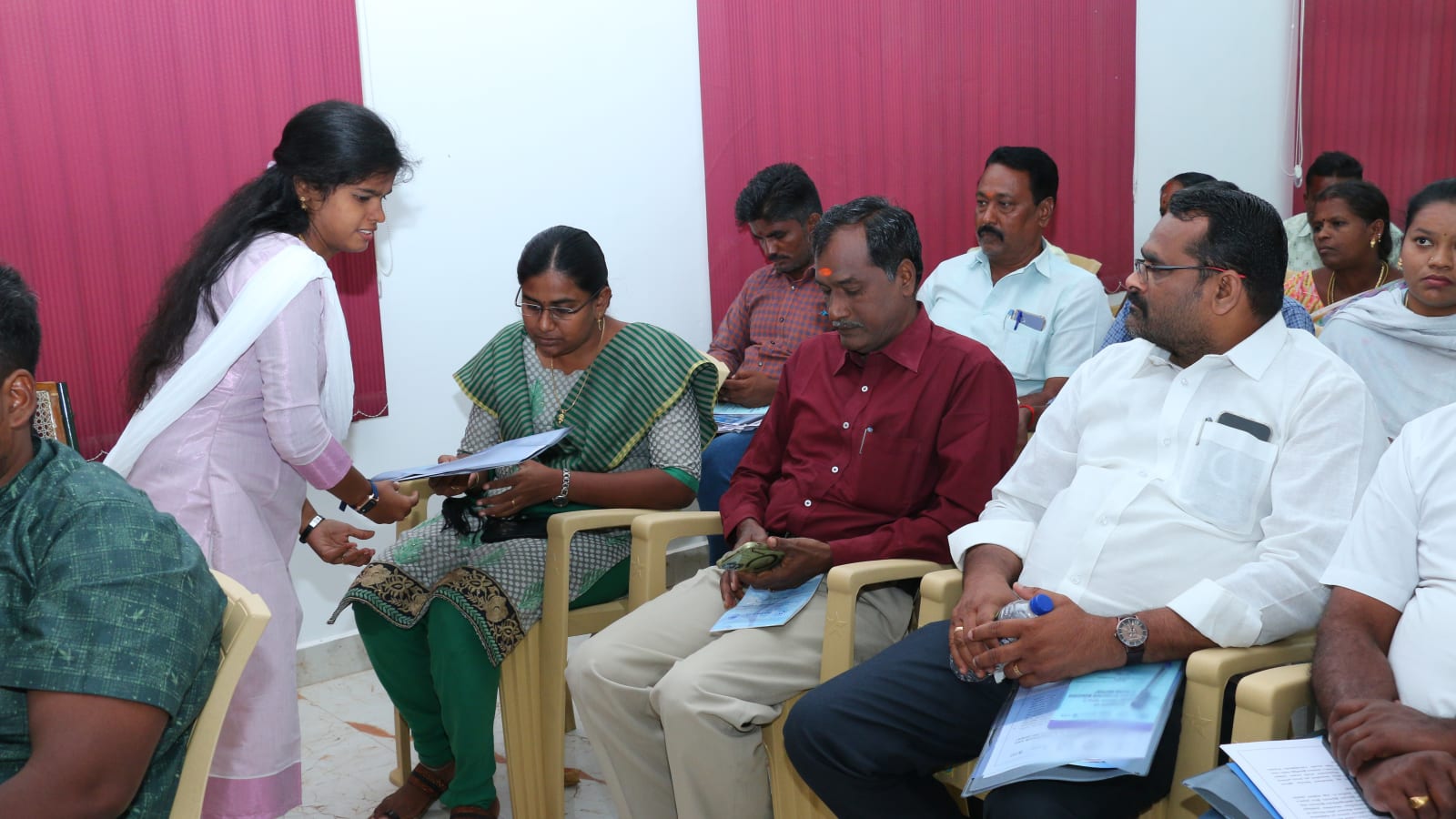
2,000+ individuals trained in technology adoption, operation and maintenance — building local technical capacity that lasts.
Solutions designed elsewhere ignore local conditions, needs and languages — so adoption quietly fails.
Training manuals and project documentation prepared for the agencies that commissioned the work, written for the watershed institutions who had to use them on the ground.
At a glance
Track record
| Programme | Period | Type | Highlights | Status |
|---|---|---|---|---|
| Rural Technology and Resource Centre | 2001–2002 | Key activity | Technology resources, demonstration facilities and training for community access | Completed |
Impact
Authored seven training manuals for watershed institutions, plus socio-economic surveys, project reports and a Total Sanitation Campaign guide — documentation produced for the agencies that commissioned the work.
Digitised 421 villages and prepared watershed maps for 479 village panchayats, giving planners a base layer they did not previously hold.
Successfully disseminated 50+ appropriate technologies including agricultural tools, renewable energy systems and water management solutions.
Achieved an 80% technology adoption success rate through systematic training, follow-up support and adaptation to local conditions and needs.
Get involved
Help us expand our technology and knowledge dissemination programmes to bridge the digital and technology divide. Your support enables us to establish more resource centres, train communities in technology adoption, and facilitate access to innovative solutions for sustainable development.