Soil health enhancement
Improved soil fertility, structure, and biological activity through sustainable management practices and organic farming techniques.
Soil health improvement, erosion control, and sustainable land use practices.
Understanding
Soil and land management encompasses the sustainable use, conservation, and improvement of soil resources to maintain and enhance agricultural productivity while protecting environmental quality.
Our approach focuses on promoting sustainable agriculture practices, organic farming techniques, and indigenous knowledge systems that enhance soil fertility and maintain ecological balance. Coodu Trust began running training programmes on indigenous farming in 2002–03, covering organic and natural farming, biofertilisers from coir pith and solid waste, herbal pesticides and panchakavya, vermi-compost, small millets for food security and agroforestry.
The training has been steady rather than spectacular. In 2004–05, 244 women in Trichy and Karur districts were trained in vermi-composting and organic farming. In 2008–09, 32 participants were trained with NABARD, Karur and 250 with DRDA, Dindigul, and 50 vermicomposting units were erected at Mylampatti village in Kadavur block, Karur. A further 72 farmers were trained in indigenous traditional knowledge that year with resource persons from Gandhigram Rural University.
Why this work matters
Dependency on chemical fertilizers and pesticides drains soil fertility while input costs keep climbing.
Hands-on training in organic farming with natural inputs and biological pest control cuts input costs and protects environmental quality.
Declining fertility, poor structure and fading biological activity leave fields less productive every season.
Vermi-composting, enriched farmyard production and organic waste utilization turn farm waste into natural fertilizer that rebuilds soil health.
Traditional farming practices that kept land productive for generations are being lost to chemical-era habits.
Indigenous-practice training and farmer-to-farmer learning — including a structured debate between two groups of 25 progressive farmers in Kadavur block, Karur, comparing conventional and organic farming systems.
Degraded, eroded land sits idle — unable to support crops, fodder or family incomes.
Sustainable land management alongside our watershed work has reclaimed 1,79,486 hectares of wasteland, as recorded in the 2018–19 annual report.
At a glance
Track record
| Programme | Period | Type | Highlights | Status |
|---|---|---|---|---|
| Training on indigenous farming practices | 2002–2009 | Training programme | Farmer training · 72 farmers trained with Gandhigram Rural University in 2008–09 | Completed |
| Sustainable agriculture training | 2002–2003 | Training programme | Farmer training · soil health focus | Completed |
| Vermi-composting and organic farming training | 2003–2009 | Training programme | Farmer training · 50 vermicomposting units built at Mylampatti, Karur | Completed |
Impact
Improved soil fertility, structure, and biological activity through sustainable management practices and organic farming techniques.
Promoted eco-friendly farming practices that maintain productivity while protecting environmental quality and reducing chemical dependency.
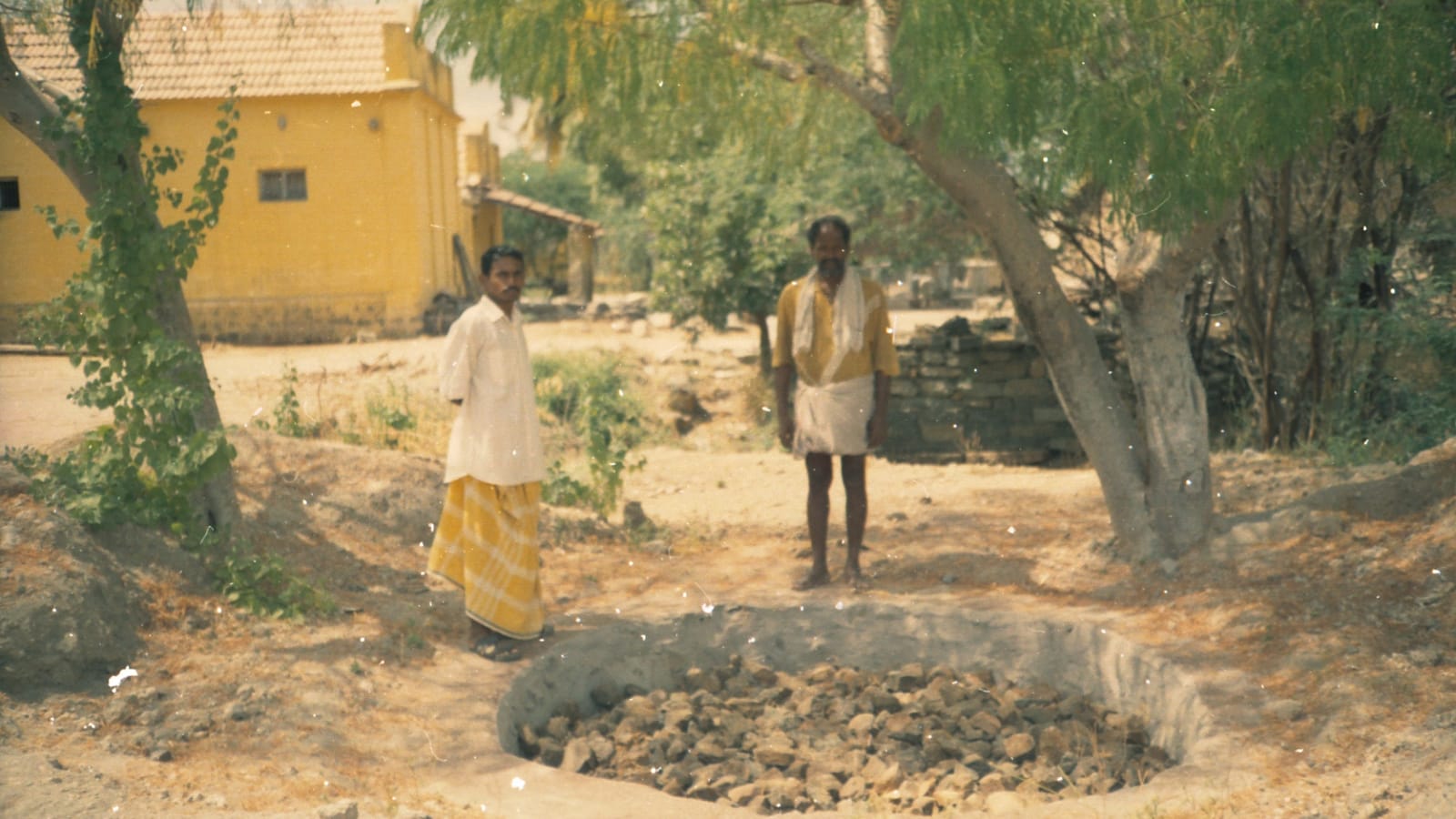
Established vermi-composting systems for organic fertilizer production — 50 units erected at Mylampatti village, Kadavur block, Karur, reducing costs and improving soil health naturally.
Revived and promoted traditional farming practices that ensure sustainable land management and ecological balance, with technical support from Gandhigram Rural University and Tamil Nadu Agricultural University.
Get involved
Join us in promoting sustainable soil and land management practices that enhance agricultural productivity while protecting environmental health. Your support helps farmers adopt eco-friendly farming techniques.