Water security
Enhanced groundwater recharge and improved water availability through comprehensive watershed treatment across 570 watersheds in 14 districts.
Comprehensive watershed development for soil and water conservation — coordinated by Coodu Trust with District Rural Development Agencies across Tamil Nadu since 2001.
Understanding
A watershed is nature's water collection system — a natural drainage basin where all surface water from rain eventually flows to a common outlet such as a river, lake, or ocean.
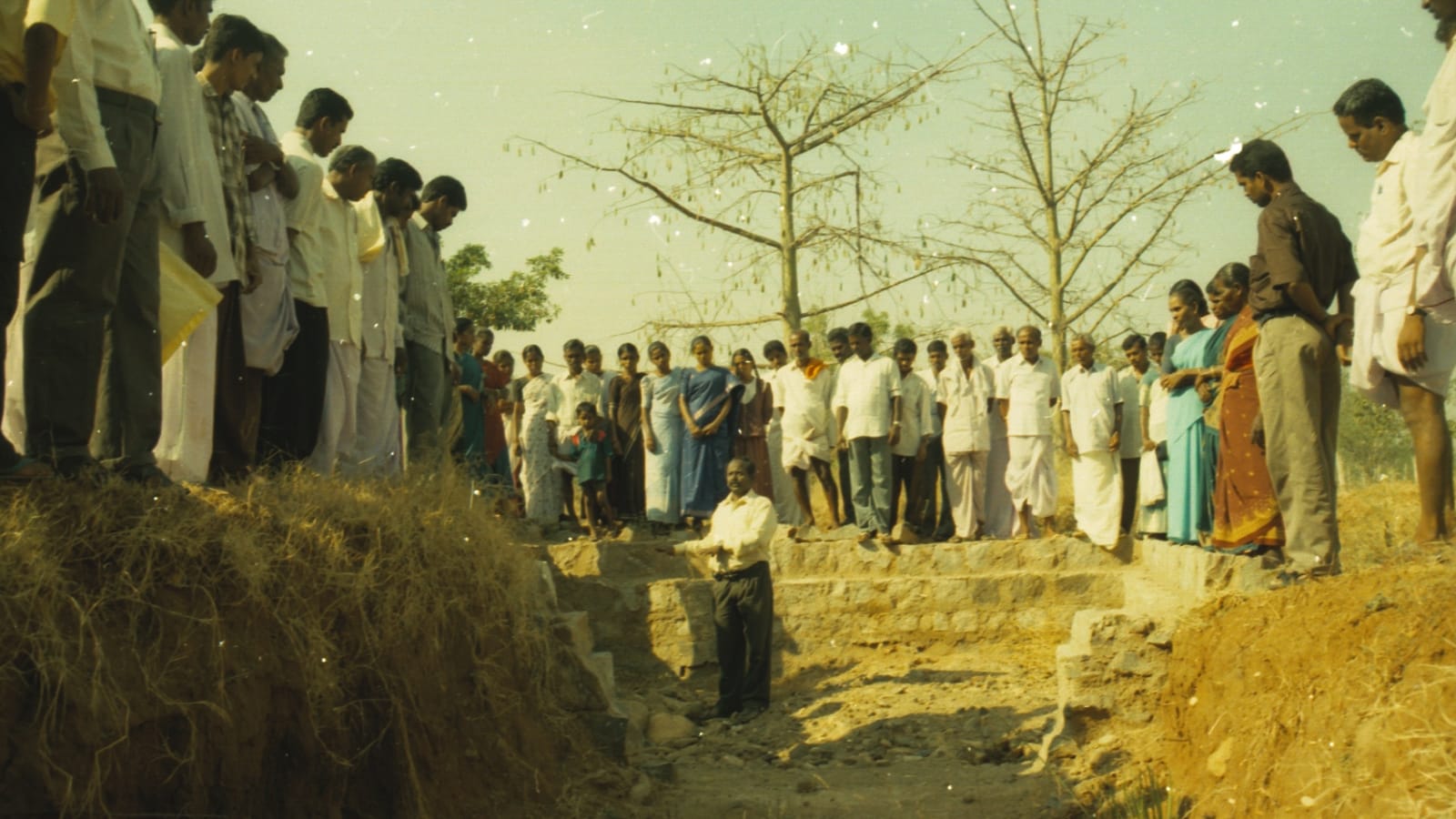
Watershed management is our comprehensive approach to sustainably develop and manage land and water resources within these critical geographical areas. Since 2001, Coodu Trust has worked as a coordinating agency on the government’s watershed programmes — the Watershed Development Teams are deputed by Coodu Trust and supervised by the respective Project Implementing Agencies, while the Trust leads training, capacity building and community mobilisation. Across all schemes the work has reached 570 watersheds in 14 districts, covering 479 village panchayats in 84 blocks.
Our programs focus on the holistic development of natural resources — soil, water, vegetation and human resources — within the watershed area. By 2017–18 that treatment extended to 33,500 hectares, roughly 1,70,000 households and a population in excess of 8,50,000 people. This integrated approach ensures sustainable utilization while dramatically improving the socio-economic conditions of communities.

Why this work matters
In drought-prone districts, wells run dry season after season — pushing families to migrate to cities for work.
Check dams, percolation structures and water harvesting raise groundwater across whole micro-watersheds — villages have reported wells that no longer run dry.
Eroded slopes and unproductive wasteland let the monsoon run off instead of soaking in.
Erosion control, afforestation and pasture development bring wasteland back into productive use — the 2018–19 annual report records 1,79,486 hectares of wasteland reclaimed.
In rainfed farming districts, one failed monsoon can wipe out a family's entire year of income.
Watershed treatment paired with livelihood training and diversified farming reduces dependence on a single rain.
Water assets built without the community decay as soon as the project team leaves.
Participatory planning, village institutions and capacity building keep every structure managed and maintained locally — 290 panchayat-level watershed committees were formed, trained and maintained across nine districts.
At a glance
Track record
| Programme | Period | Type | Highlights | Status |
|---|---|---|---|---|
| Pradhan Mantri Krishi Sinchayee Yojana (PMKSY) — watershed development | 2021–2025 | National scheme | Capacity building and exposure visits — 2,408 participants trained | Ongoing |
| Integrated Watershed Management Programme (IWMP) | 2011–2023 | National programme | Consultant, then coordinating agency — recorded in seven annual reports | Completed |
| Drought Prone Area Programme (DPAP) | 2001–2006 | National programme | Foundation project — 54 watersheds in four districts by 2003–04 | Completed |
| Integrated Watershed Development Programme (IWDP) | 2001–2009 | National programme | Largest scheme — 126 watersheds in 2003–04 | Completed |
| Tamil Nadu Comprehensive Watershed Programme (TNCWP) | 2001–2006 | State programme | 65 watersheds in five districts, plus plantation on 5,860 hectares | Completed |
| National Watershed Development Programme for Rainfed Areas (NWDPRA) | 2002–2006 | National programme | Specialist programme for rain-dependent farmland in Dindigul and Madurai | Completed |
Impact
Enhanced groundwater recharge and improved water availability through comprehensive watershed treatment across 570 watersheds in 14 districts.
Reduced soil erosion, improved soil fertility, and enhanced agricultural productivity through sustainable soil conservation practices.
Restored degraded landscapes, improved biodiversity, and created sustainable ecosystems that support both nature and communities.
Built local capacity for natural resource management — 290 panchayat-level watershed committees formed, trained and maintained across nine districts to carry the work on after each project closed.
Get involved
Join us in protecting and restoring watersheds for sustainable water security and environmental resilience. Your support builds climate-resilient communities.